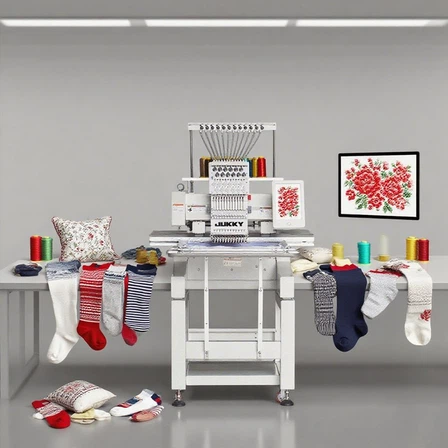
The Applications of Multifunctional Embroidery Machines
Multifunctional embroidery machines have revolutionized textile crafting by integrating flat, sequin, towel, and mixed embroidery with intelligent digital control. Unlike single-function models, they meet diverse needs across home crafting, small businesses, and professional production, bridging manual creativity and automated precision. With AI integration, professional-level embroidery is now accessible to hobbyists and industry practitioners alike.
1. Home Crafting: Personalized Creativity and Daily Aesthetics
For home users, these machines infuse personality into daily items, turning ordinary objects into unique handcrafted pieces. User-friendly interfaces, built-in pattern libraries, and AI design conversion let beginners create professional embroidery without extensive skills.
Garment Personalization: Users can embroider names, patterns, or custom designs on T-shirts, sweaters, and children's wear. Free-arm designs simplify embroidery on cuffs and collars, while AI converts photos/sketches into embroidery data with up to 10 style options.
Home Decoration: They embellish curtains, bedspreads, pillowcases, and tablecloths. From delicate flat to 3D towel embroidery, they add texture; some models support sequin embroidery for shiny, fashionable home decor.
Handmade Gifts: These machines create thoughtful personalized gifts-custom baby blankets, monogrammed tote bags, or wall hangings-carrying sentimental value for special occasions.
2. Small Businesses and Handicraft Studios: Efficient Customization Services
Small businesses, boutiques, and independent crafters rely on these machines for high-quality custom products, using their efficiency and versatility to meet customer demands.
Custom Apparel and Accessories: Boutiques offer personalized services (logos, slogans, patterns) on jackets, hats, and handbags. Multiple embroidery techniques let them create unique, marketable products distinct from mass-produced items.
Handicraft Production: Studios streamline production of embroidered artworks, souvenirs, and ornaments. Pattern adjustment features (rotation, scaling) enable diverse designs, while high-speed operation (up to 850 rpm) boosts efficiency.
Custom Branding: Businesses create branded merchandise (uniforms, promotional bags, gifts) to enhance recognition and add a professional touch, building a unique brand image.
3. Professional Textile and Fashion Industry: High-Precision Mass Production
In professional textile and fashion, these machines are crucial for mass production, offering precision, speed, and consistency unmatched by manual embroidery, used widely in clothing and home textile manufacturing.
Fashion and Apparel Manufacturing: They add decorative embroidery to high-end clothing (wedding dresses, formal wear). Sequin embroidery (3mm to 11mm) is popular for evening wear, while mixed techniques create complex, layered designs that increase product value.
Home Textile Production: Large manufacturers use them for embroidered bed linens, curtains, and upholstery. Their ability to handle large areas and stitch types ensures consistent bulk quality, with automatic features reducing labor costs.
Specialty Textiles: They produce specialty items-safe children's clothing, durable medical textiles, and digital reproductions of traditional cultural textiles.
4. Educational and Creative Fields: Skill Development and Artistic Expression
Beyond practical use, these machines are increasingly used in education and art, fostering skill development and creative expression.
Vocational Education: Textile schools use them to teach embroidery, digital design, and production. Intelligent features (pattern preview, error diagnostics) help students learn efficiently for industry careers.
Artistic Creation: Artists use them as a medium for contemporary art, combining traditional craftsmanship with digital technology to experiment with textures and forms, expanding embroidery as an art form.
Conclusion
Multifunctional embroidery machines have transformed embroidered product creation, with applications across home, business, industry, and creative fields. Their integration of techniques, digital control, and AI makes embroidery accessible and versatile. Advancing technology (cloud libraries, real-time projection) will further expand their use, blending practicality and creativity.